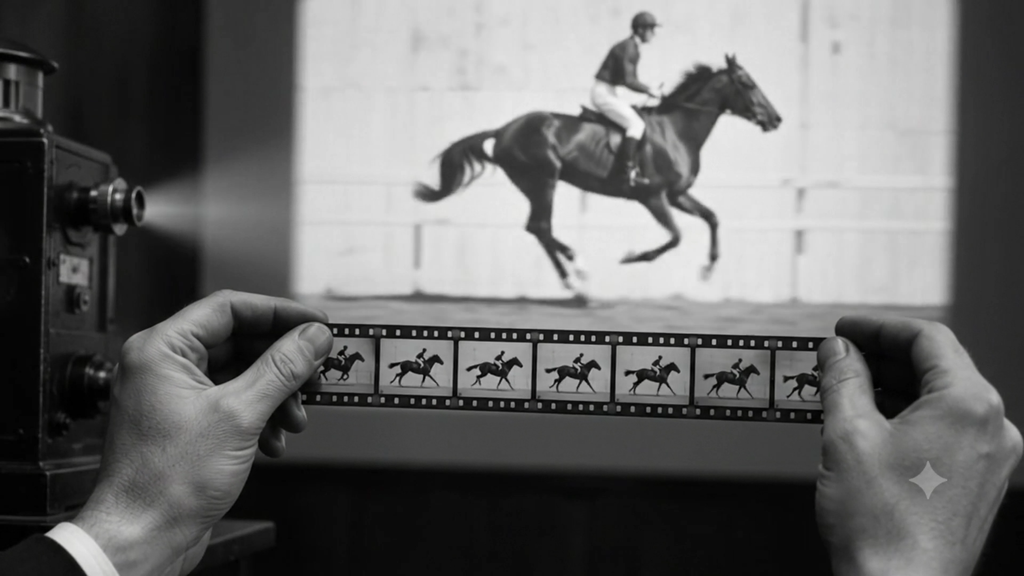
Motion pictures made it possible to observe recorded physical motion. VOM technology reverses the process: video recordings of desired physical motion become programs that control machines to reproduce that motion in the physical world.
Virtual Observation Model (VOM) is a proposed approach to programming and controlling physical machines using visual representations of desired operations.
Instead of describing every machine movement through conventional programming instructions, a person works with generative AI to create, examine, and refine a sequence of images representing how an operation should be performed. This visual sequence becomes a reference program that VOM is designed to use during physical execution.
Watch How VOM Works — 6-Minute Video Presentation
Creating the Visual Program
A person begins by describing to generative AI the physical operation they want a machine to perform. AI produces a proposed visual sequence showing how the operation could be carried out.
The person examines the sequence, requests modifications, and works with AI to refine individual images or portions of the sequence. This process continues until the visual representation expresses how the person wants the operation performed.
The resulting sequence becomes a Desired Observation Program (DOP). It provides a visual reference for the intended operation, including the sequence and timing of important actions. The person can review and edit the program before authorizing physical execution.
Observing Physical Execution
During physical execution, cameras observe the machine, its tools, and the objects involved in the operation. These cameras provide current images of what is actually happening in the physical environment.
VOM is designed to associate these current observations with corresponding desired images in the visual program. The observations may come from multiple cameras positioned to provide different views of the operation.
By using images of the actual operation, VOM can account for differences between the intended visual representation and the physical conditions encountered during execution.
Comparing Desired and Current Observations
At each stage of physical execution, VOM is designed to compare a current camera image with the corresponding desired image from the visual program.
Differences between the two images are identified as visual errors. These may include differences in position, alignment, orientation, spacing, or other observable relationships between objects and machine components.
VOM uses the measured visual errors to determine corrective machine movements intended to reduce those differences. By repeatedly observing, comparing, and correcting, the system is designed to guide the machine through the desired operation without requiring a complete precomputed three-dimensional motion trajectory.
Continuous Visual Feedback Control
VOM is designed to repeat the observation, comparison, and correction process throughout physical execution. As the machine operates, new camera images provide updated information about its actual position and the changing relationships between the machine, its tools, and surrounding objects.
The system uses these observations to update machine control commands, progressively reducing relevant visual errors while advancing through the desired sequence of observations.
This continuous feedback approach is intended to allow the machine to respond to differences between the AI-generated visual program and actual physical conditions, rather than relying exclusively on predetermined movements.
Visual Explanation
The following narrated presentation illustrates the proposed VOM approach to creating visual programs and using camera observations to guide physical machine operations. It explains how desired and current images are compared and how the resulting visual differences are intended to provide feedback for machine control.